












DOST partners with Irradiation Solutions Inc. to advance radiation processing in the country
- Details
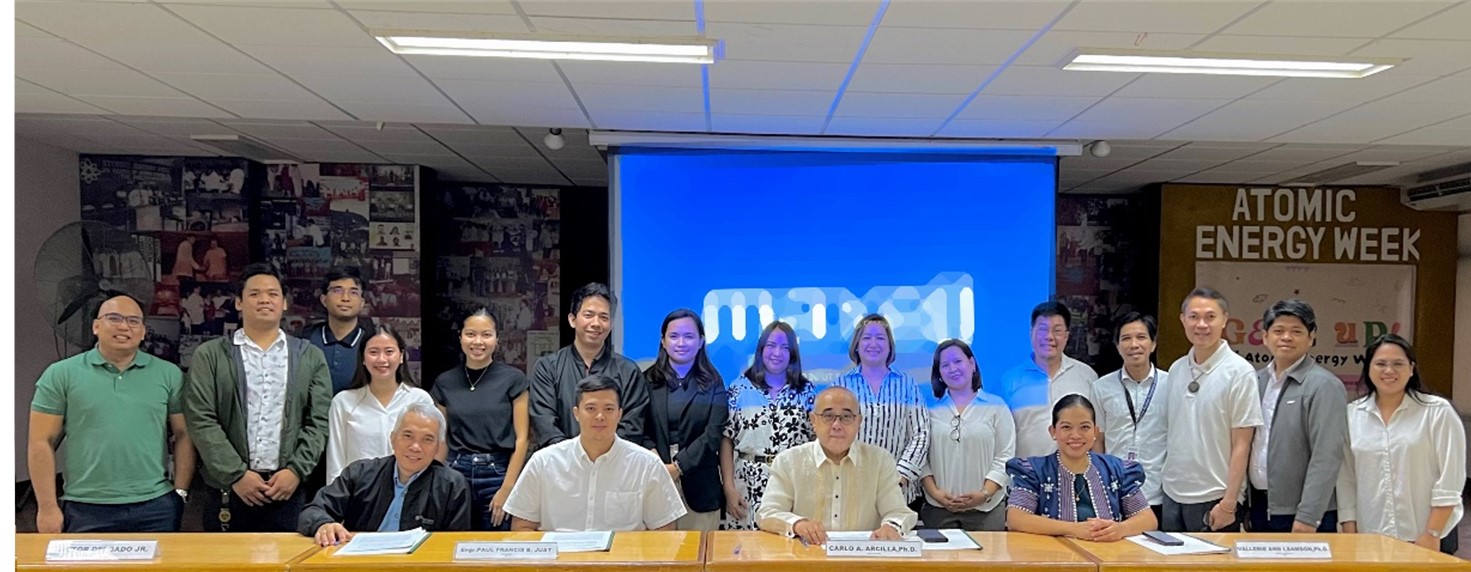
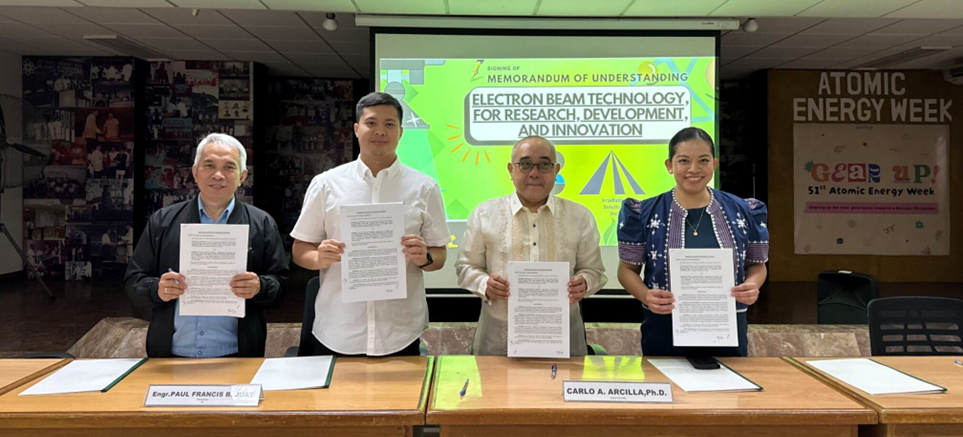
Top photo: PNRI and ISI E-BEAM representatives look forward to a meaningful and productive collaboration after the MOU signing.
Bottom photo: The pact is now sealed as PNRI Director (third from left) Dr. Carlo Arcilla shows the inked accord with (L-R) ISI E-BEAM Vice President Mr. Victor M. Delgado Jr., ISI E-BEAM President Paul Francis B. Juat, and PNRI Deputy Director Vallerie Ann Samson.
DOST partners with Irradiation Solutions Inc. to advance radiation processing in the country
The Department of Science and Technology-Philippine Nuclear Research Institute (DOST-PNRI) inked a Memorandum of Understanding with Irradiation Solutions Inc, (ISI E-BEAM) on December 2, 2024, solidifying their partnership to advance radiation processing in the Philippines. The agreement marks a significant step toward stepping up electron beam (E-beam) technology for research, development, and innovation in the country.
Radiation processing, particularly through E-beam technology, is a cutting-edge application of ionizing radiation to enhance product quality, extend shelf life, and ensure safety. Its benefits span across various industrial processes, such as sterilization of medical devices and packaging materials, reduction of microorganisms and elimination of pathogens in food products, and improvement of material properties for manufacturing and pharmaceutical applications, among others.
Such capabilities are crucial for meeting stringent global standards for health, safety, and trade, while also fostering innovative solutions for emerging challenges.
DOST-PNRI hypes nuclear for all generations on Atomic Energy Week 52: Gen-Atom!
- Details
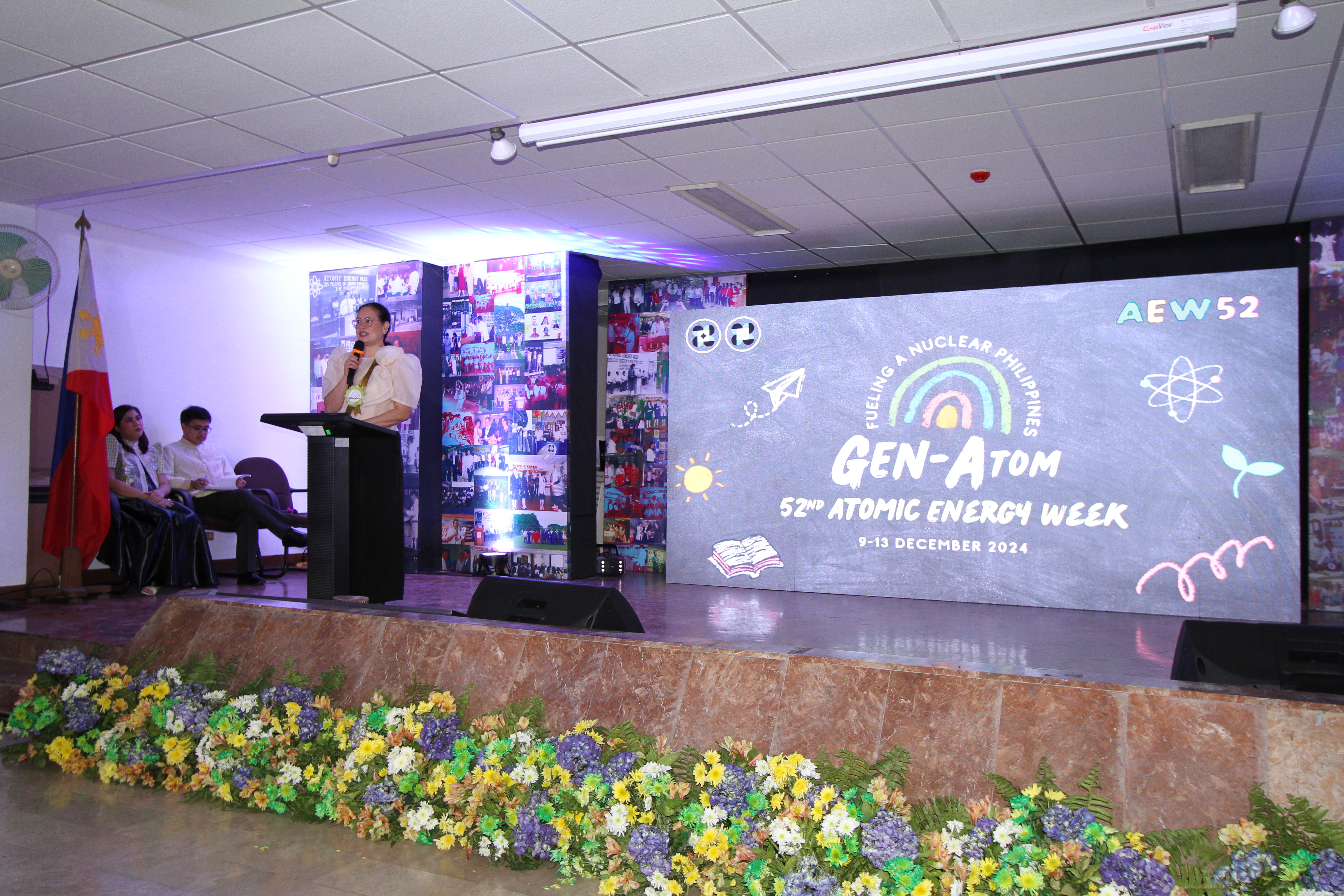
Secretary Renato Solidum, Jr. expresses his support to the PNRI in hosting this year’s Atomic Energy Week, in his speech delivered by DOST Undersecretary Maridon Sahagun, who revealed that it is her first-ever AEW participation.
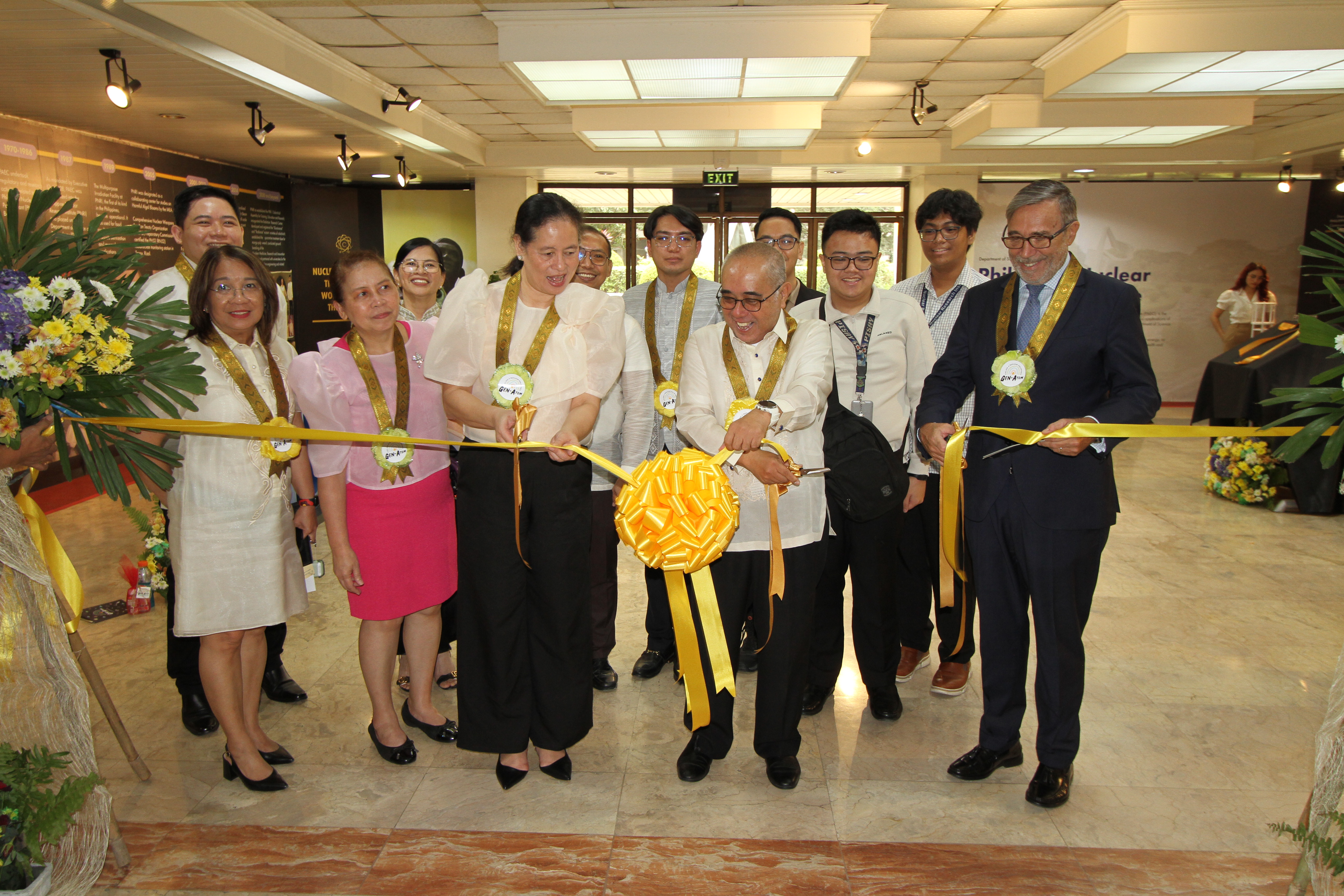
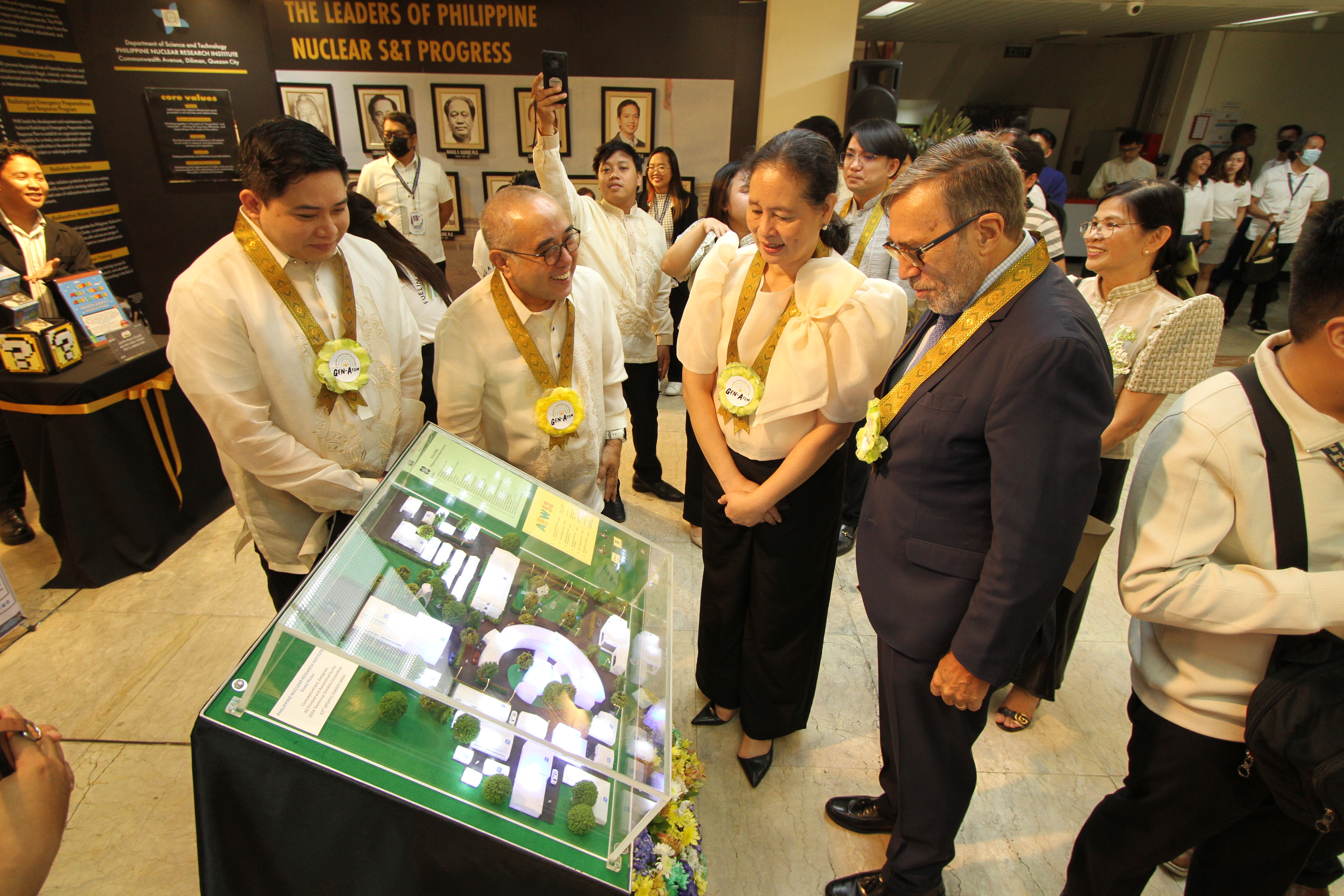
Left Photo: DOST Undersecretary for Scientific and Technical Services Maridon Sahagun (1st row, 3rd from left) with PNRI Director Dr. Carlo Arcilla (1st row, 2nd from right), and Ambassador Ricardo Luis Bocalandro of Argentina (1st row, extreme right), cut the ceremonial ribbon, signaling the opening of the AEW exhibits composed of six Gen-Atom displays featuring the country’s latest advancements in radiation chemistry, food irradiation, reactor technology, environmental radioactivity monitoring, radiation protection and nuclear medicine (see photos below article). Others in photo are the 1st International Nuclear Science Olympiad Gold Medalists Mr. Mohammad Nur Casib and Neil Kyle Maniquis (2nd row, 1st and 2nd from right)
Right photo: Dr. Arcilla and AEW Executive Committee Chairperson and Career Scientist Dr. Chitho Feliciano show a new, 3D-printed diorama of PNRI to the distinguished guests at the opening of the 52nd AEW.
DOST-PNRI hypes nuclear for all generations on Atomic Energy Week 52: Gen-Atom!
This year's nuclear celebration of the generation finally gets rolling as DOST-Philippine Nuclear Research Institute (DOST-PNRI) formally opens the 52nd Atomic Energy Week in Diliman, Quezon City this December 9.
With the theme "Gen-Atom: Fueling a Nuclear Philippines," the celebration aims to bring nuclear science and innovations closer to all ages, but with particular emphasis on reaching out to Gen-Zs and younger individuals.
Among the distinguished guests for the formal launching of exhibits are Ambassador Ricardo Luis Bocalandro of Argentina and DOST Undersecretary for Scientific and Technical Services Maridon Sahagun.
Read more: DOST-PNRI hypes nuclear for all generations on Atomic Energy Week 52: Gen-Atom!
PH nuclear initiatives tackled in IAEA ministerial confab
- Details
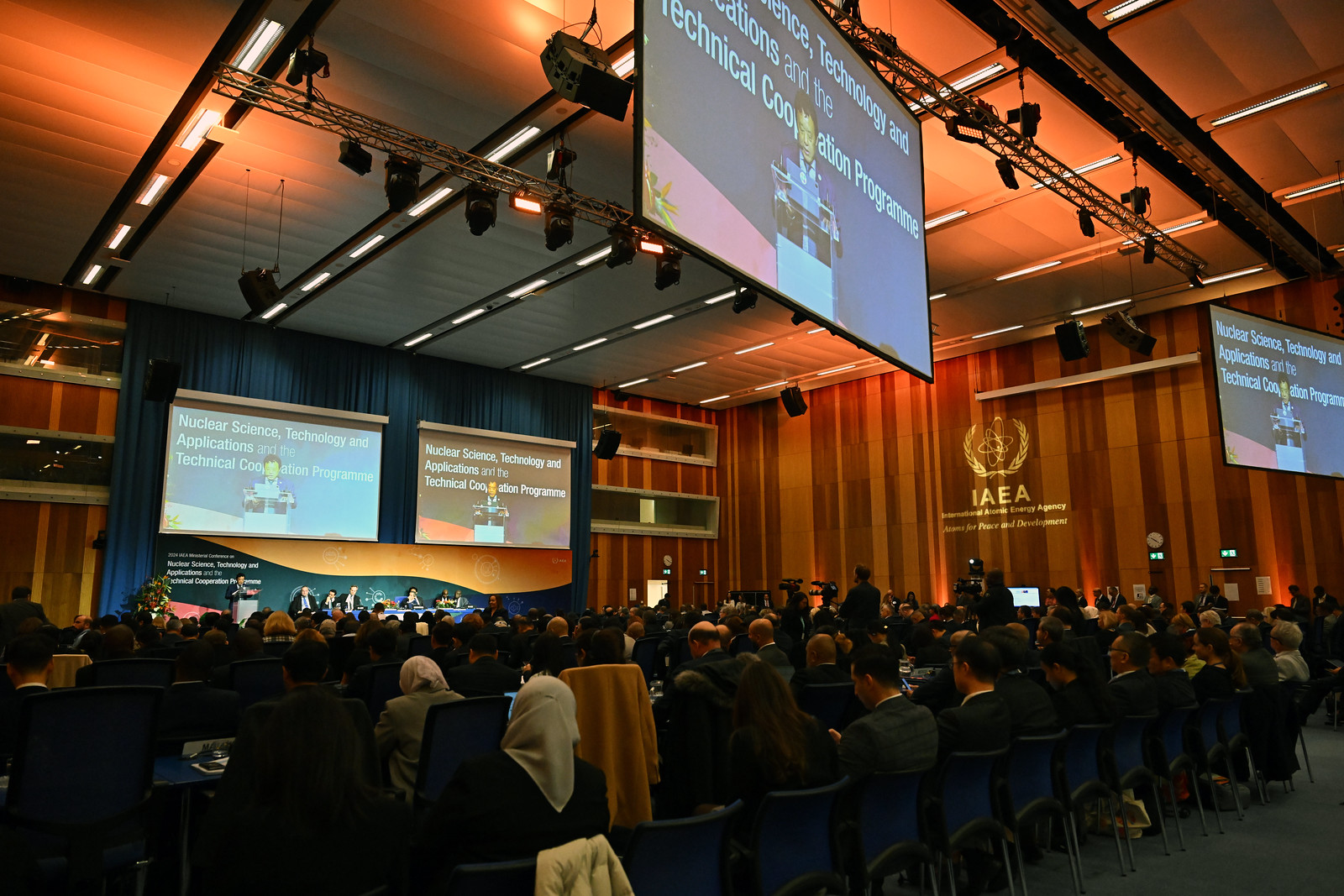
Photo from the IAEA
PH nuclear initiatives tackled in IAEA ministerial confab
The Philippine delegation presented various key initiatives aimed at advancing the country’s nuclear science and technology at the recent 2024 Ministerial Conference of the International Atomic Energy Agency (IAEA) held 26-28 November 2024 in Vienna, Austria.
Foremost among said initiatives is the technical cooperation between the Philippines and the IAEA which has been continually made robust through the years, resulting in various endeavors as reported by Department of Science and Technology (DOST) Undersecretary for Research and Development Leah J. Buendia as head of the delegation.
“We view this conference as an opportunity for IAEA Member States to reaffirm our commitment to realize the full benefits of nuclear applications, and their contribution toward achieving the Sustainable Development Goals,” said Usec Buendia.
Read more: PH nuclear initiatives tackled in IAEA ministerial confab
DOST fuels a nuclear Philippines at the Atomic Energy Week 2024
- Details
DOST fuels a nuclear Philippines at the Atomic Energy Week 2024
Whether you’re a millennial, boomer, or zoomer, whatever your generation, we can all help fuel a nuclear Philippines as the country celebrates this year’s Atomic Energy Week (AEW) from December 9 to 13 at the Department of Science and Technology-Philippine Nuclear Research Institute (DOST-PNRI) in Commonwealth Avenue, Quezon City.
With the tagline “Gen-Atom: Fueling a Nuclear Philippines”, the 52nd AEW will once again feature various activities such as technical session, career talk and poster-making contest for students, and open-house guided tours of nuclear S&T exhibits all day long, from December 9 to 12.
Read more: DOST fuels a nuclear Philippines at the Atomic Energy Week 2024


