












Nuclear Energy is Green Energy, says DOST-PNRI
- Details

Nuclear Energy is Green Energy, says DOST-PNRI
Amidst widespread blackouts and increasing electricity prices across the globe, the DOST - Philippine Nuclear Research Institute once again supports the calls from various sectors for promoting the use of nuclear energy in the Philippines.
Speaking to members of the media, PNRI Director Dr. Carlo Arcilla and Dr. Ronald Gatchalian of the PNRI Nuclear Reactor Operations Section reiterated the merits of nuclear power as an invaluable future member of the country's energy mix, from its sheer energy density and high capacity factor to its sustainability as leading baseload source of electricity with virtually zero emissions contributing to global warming and climate change.
They were joined by members of nuclear advocacy organization Alpas Pinas and House Special Committee on Nuclear Energy Chairperson, Cong. Mark Cojuangco, who continued his calls for the enactment of bills currently pending in the Senate.
These are the PhilATOM bill aiming to create a national independent nuclear regulatory body as well as the bill for a new nuclear liability law to ensure the liabilities and responsibilities of facility operators in the event of a nuclear emergency.
2nd National Nuclear Olympiad Kicks Off Elimination Round
- Details


Student-participants from across the country during the elimination round of the 2nd Philippine Nuclear Science Olympiad
2nd National Nuclear Olympiad Kicks Off Elimination Round
And the ball goes rolling as more than a hundred student contestants from secondary schools across the country, ready to showcase their mastery of atomic principles and applications, finally compete in the elimination round of the 2nd Philippine Nuclear Science Olympiad (PNSO) this April 3.
The two-and-a-half hour written exam for the elimination round consists of a gauntlet of ten conceptual questions, five short problems and two long problems – one theoretical and another experimental – with questions covering various nuclear and radiation-related concepts such as atomic structure, environmental radioactivity, nuclear fission and fusion, radiation risk and safety, history of nuclear science and its various applications.
Organized by the Department of Science and Technology – Philippine Nuclear Research Institute (DOST-PNRI), in collaboration with DOST Regional Offices and the Philippine Science High School (PSHS), the 2nd PNSO aims to select the next generation of young Filipino nuclear scientists, who will represent the country in the upcoming 2nd International Nuclear Science Olympiad (INSO) in Malaysia by July this year.
To that end, the competition was opened to all Filipino secondary school students from 15 to 20 years old, who are not yet enrolled in college by August 31, 2025 in order to meet the INSO requirements.
And to further widen the net and ensure that the contest reaches out to the brightest talents from the country’s various regions, this year’s Olympiad is simultaneously held in four testing stations – the Philippine Science High School (PSHS) – Central Luzon Campus in Clark, Pampanga, PSHS – Central Visayas Campus in Argao, Cebu, PSHS – Central Mindanao Campus in Baloi, Lanao Del Norte, and the DOST-PNRI compound in Diliman, Quezon City for the National Capital Region.
The top 20 students, who will be announced on April 9, will be given the opportunity to participate in a further month-long training on nuclear science held by PNRI’s own researchers and specialists, after which a final exam will be held to select the top five winners – P25,000 for first place, P20,000 for second place, P15,000 for third place, P10,000 for fourth place and P5,000 for fifth place.
These leading students – four official participants and one reserve – will form the Philippine National Team for the 2nd INSO along with coaches from PNRI.
The first PNSO was held in December 2023 as part of the 51st Atomic Energy Week Celebration. Building on the remarkable success of the Philippine team at the 1st INSO, where the Philippines secured 2 gold and 1 silver medals, along with a "Nuclear Ambassador" title and top scorer award, the 2nd PNSO seeks to further cultivate excellence in nuclear science education within the country.
Nuclear analytical tech labs earn ISO 17025:2017 accreditation
- Details
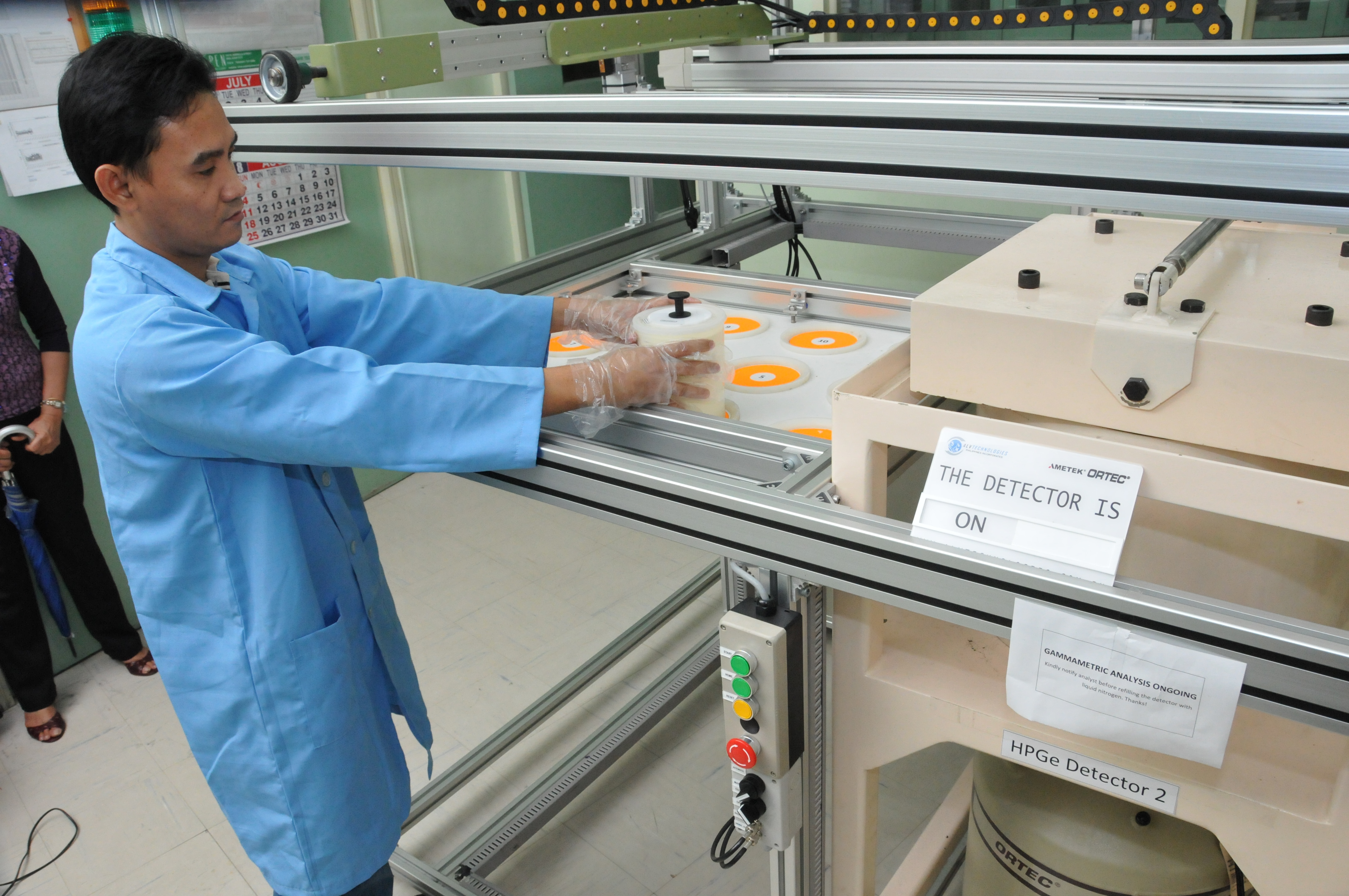
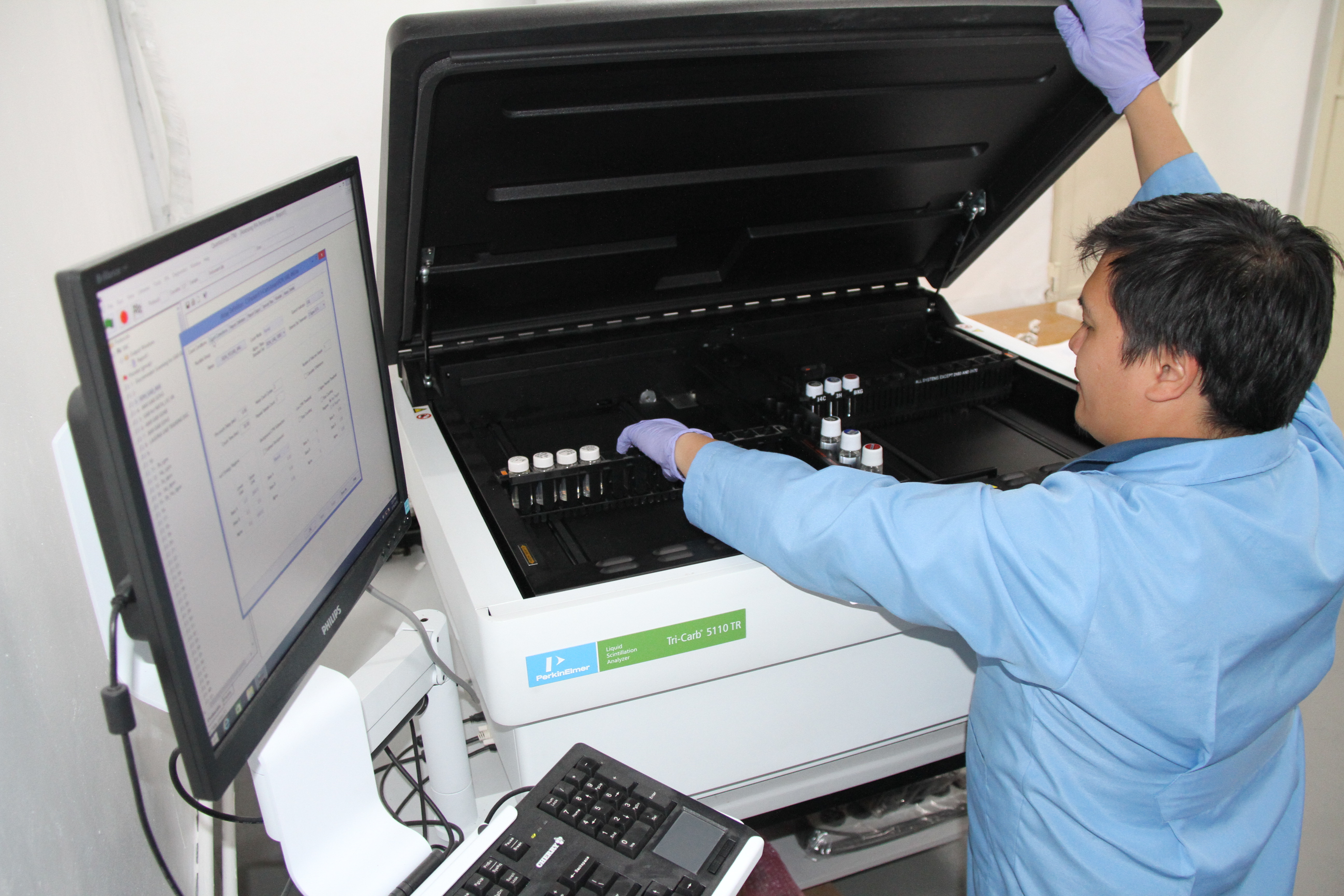
Researchers from the PNRI Nuclear Analytical Techniques Applications Section performing gammametric analysis (above) and liquid scintillation counting (below) for detecting traces of radioactivity in food, water and other products, as well as for advanced studies of isotope composition of samples, among others
Nuclear analytical tech labs earn ISO 17025:2017 accreditation
Ensuring the credibility and unique advantages of nuclear technology in serving the general public, the Department of Science and Technology - Philippine Nuclear Research Institute (DOST-PNRI) is once again accredited under ISO 17025:2017 in the field of chemical testing, covering the laboratories and staff of its Nuclear Analytical Techniques Applications Section (NATAS).
In particular, the scope of the accreditation includes the facilities for gross alpha and beta activity analysis, as well as its gammametric analysis for isotopes such as Cesium-137 and 134, Iodine-131, and Potassium-40.
“Our congratulations to the NATAS team for once again proving the top-notch capabilities of PNRI coupled with technical competence and efficiency in rendering its services,” said Dr. Preciosa Corazon Pabroa, who heads the PNRI Nuclear Services Division.
“We are proud of the Institute’s well-utilized isotope and nuclear analytical technologies, not only in providing invaluable data to our researchers but also in serving clients from various sectors, whose fees are a welcome contribution to the public coffers.”
Read more: Nuclear analytical tech labs earn ISO 17025:2017 accreditation
HS students welcome women’s month with Nuclear Science 101
- Details
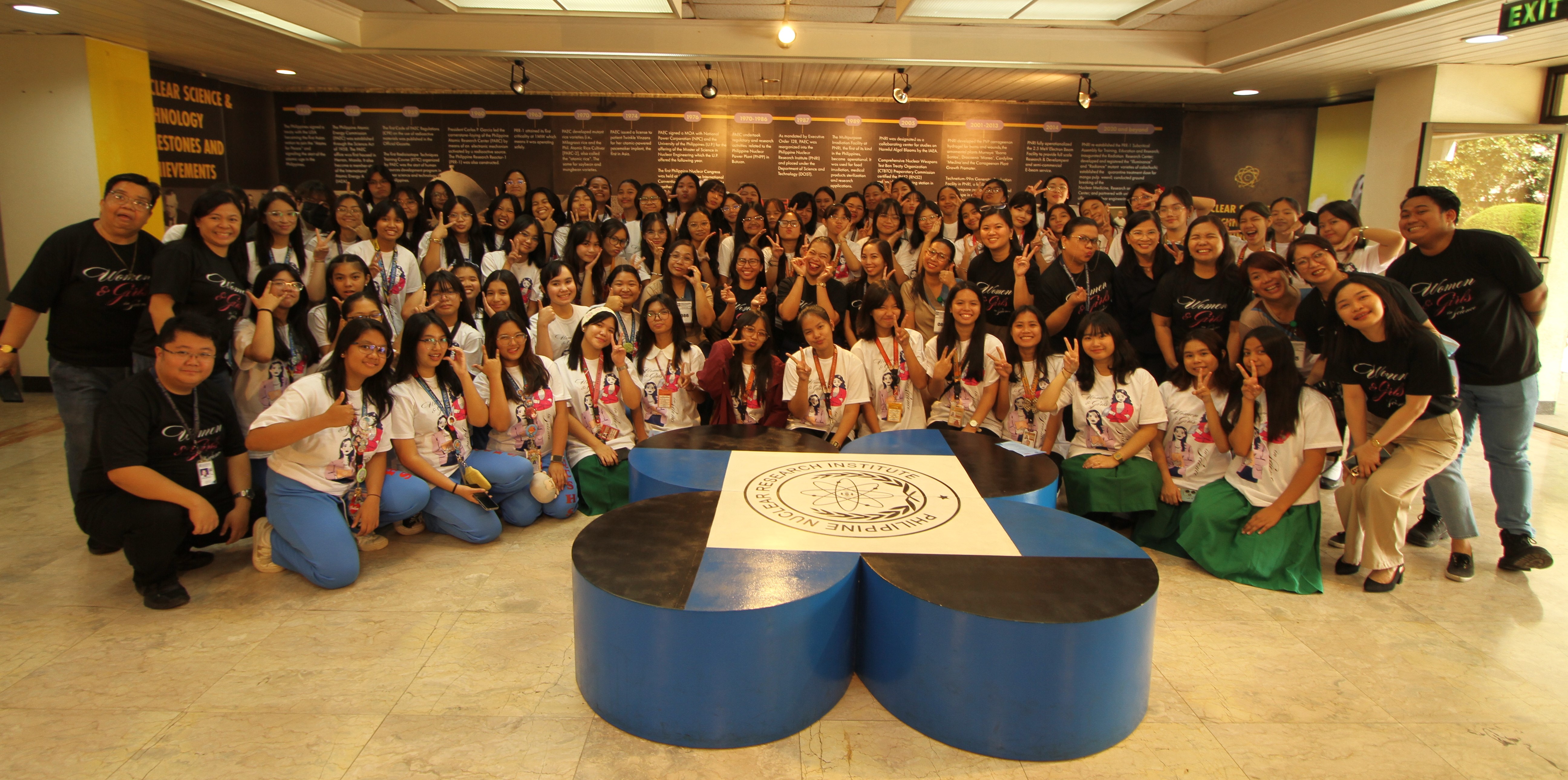

HS students welcome women’s month with Nuclear Science 101
High school students get to celebrate women's month with a healthy dose of atomic knowledge and inspiration as the Department of Science and Technology - Philippine Nuclear Research Institute (DOST-PNRI) hosts the Nuclear Science 101 for Young Women and Girls as part of the National Women's Month celebration.
Educators and researchers in various fields taught the students from San Francisco High School and Quezon City Science High School to soar high and eventually be the country's future scientists and innovators.
Read more: HS students welcome women’s month with Nuclear Science 101


